Is it possible to open up hooded eyes with Botox alone? Sometimes, yes, but only within narrow limits, and the way it is done matters as much as the dose. The right injector can create a subtle lift and soften a heavy brow without freezing your expression. The wrong approach can drop the brow, narrow the eyelid aperture, or cause eyelid ptosis that takes weeks to fade.
What “hooded” really means and why muscle balance matters
Hooding describes extra skin or soft tissue that drapes over the upper eyelid, either from genetics, bone structure, chronically active frown muscles, age-related brow descent, or true eyelid skin redundancy. With age, the frontalis muscle that lifts the brow tires, collagen thins, and the brow migrates downward. If your upper eyelid skin is plentiful or your bony brow is low set, even a small brow drop is obvious. Botox does not remove skin. It weakens muscles that create downward pull or soften wrinkles formed by movement. So, any lift comes from strategic relaxation of muscles that depress the brow, allowing the natural elevator, frontalis, to win by a small margin.
Where injectors go awry is in treating forehead lines aggressively in someone who relies on lifting the brows to see. Heavy dosing across the central forehead turns off your elevator, the brow settles, and hooding looks worse. Done thoughtfully, conservative dosing in the upper third of the forehead, with tiny relaxant touches to brow depressors, can open the eye a few millimeters. Those millimeters can look dramatic in photos, but they are not surgical results.
Who is likely to benefit from Botox for hooded eyes
Patterns I have seen respond well share two traits: mild to moderate brow descent and overactive brow depressors. If the corrugators and procerus (the glabellar complex) pull hard inward and down, releasing them allows the medial and central brow to float slightly higher. If the lateral orbicularis oculi clamps the tail of the brow, a feather of Botox just under the tail can create a light wing.
People less likely to see meaningful improvement are those with true dermatochalasis, meaning excess eyelid skin, or a very low-set bony brow. In those cases, Botox can still soften lines and reduce squinting, but lift is limited. If you need your frontalis to keep your field of view clear, you are at higher risk of feeling heaviness after forehead treatment. In my chair, I flag these patients early, show them in the mirror how much they recruit the brow to open their eyes, and adjust the plan to protect function.
How precise technique shapes results
Technique is the difference between a bright-eyed refresh and three months of brow fatigue. Botox works locally, but it spreads a few millimeters from each injection point, more if the area is warm or massaged. For hooded eyes, the injector’s goal is asymmetric muscle control: relax downward pull more than upward pull, and do it with microaccuracy.
A measured strategy typically includes careful placement for the glabellar complex, with priority on corrugators that angle downward. Small aliquots at the procerus root can reduce the inward scowl without over-relaxing nearby frontalis fibers. For the lateral brow, ultra superficial, tiny deposits into the lateral orbicularis oculi can ease downward drag and accent a soft lift at the tail. The forehead line plan often shifts upward: lighter units in the upper third, skipping or microdosing the lower third to preserve your ability to lift.
Several technical details matter here. Ultrafine needle choice helps use microdroplet technique, which means tiny volumes placed in multiple points rather than a few large injections. Feathering the edges of patterns avoids sharp on-off zones that create “peaks” or odd eyebrow shapes. Angle, depth, and patient anatomy guide the tenting technique in delicate zones so that product sits where it should, not traveling toward the levator palpebrae that opens the eyelid.
Avoiding the pitfalls: heaviness, asymmetry, and ptosis
Brow heaviness after Botox is usually from over-treating the lower forehead or treating a frontalis that was compensating for brow descent. Asymmetric eyebrows can come from uneven dosing on the corrugators or from differing baseline strength on each side. Eyelid ptosis after Botox happens when toxin diffuses to the levator muscle. It is uncommon with conservative, well-placed dosing, but it can happen, especially if injections are too low at the central forehead.
When I evaluate a face, I ask patients to raise their brows, frown, and smile, and I palpate corrugator bulk. I look for a lateral brow tail that is tucked downward and for frontalis recruitment at rest. I map injection patterns that respect what I call “functional zones.” That means preserving lift fibers that your eyes rely on and addressing only the downward vectors that create heaviness. I keep a strict no-rub, no heavy exercise rule for 4 hours after treatment to reduce spread. If a patient ever has ptosis, I address it promptly with apraclonidine or oxymetazoline eye drops to stimulate Müller’s muscle for a temporary lift and track progress weekly until it resolves, which typically takes 2 to 6 weeks.
How much lift to expect and how long it lasts
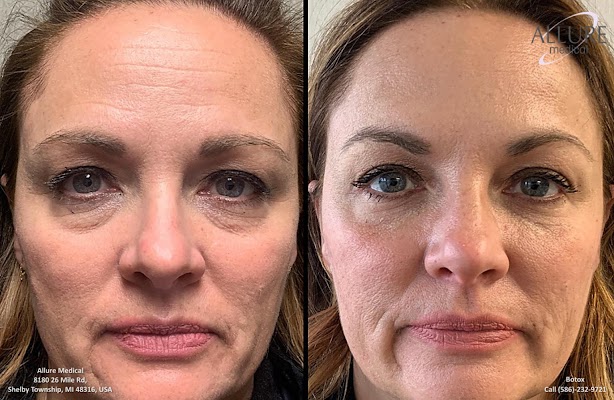
Realistic lift from Botox for hooded eyes sits in the 1 to 3 millimeter range at the brow tail or central brow. Some patients look noticeably more awake with as little as 1 millimeter because light catches the eyelid differently. The effect begins around day 3, peaks at 10 to 14 days, and lasts 8 to 12 weeks for the brow-opening aspect. Glabellar softening may hold 3 to 4 months. Because the lift relies on a balance between muscles, regular cyclic treatments often maintain a more consistent result, but it is wise to start with lower doses and adjust over two visits rather than overshoot in a first session.
When Botox is not the right tool
If the upper eyelid skin sits on the lashes or you push the brow up habitually just to see your crease, neurotoxin alone will not solve the mechanical problem. You might be a candidate for upper blepharoplasty, brow lift variations, energy-based skin tightening, or filler support at the brow or temple. Sometimes a narrow face with botox is not desirable, especially if you already have a hollow upper orbit. Adding filler to the lateral brow or temple can restore framework and lift skin away from the lid. In darker skin tones where scars may pigment, less invasive support like radiofrequency microneedling or skin boosters might be preferred.
For smile lines radiating from squinting, we can address crow’s feet with baby botox for crow’s feet to reduce crinkling without flattening your smile. For under eye lines, tiny doses must be used with caution. The orbicularis under the eye helps with eyelid closure, and too much product can worsen puffiness or create a shelf. When in doubt, lighter dosing and spacing follow-up touch-ups deliver safer, more natural movement.
Choosing an injector who knows how to protect your eyes
Credentials and experience matter more with eyelid-adjacent injections than almost any other cosmetic area. I look for an experienced botox provider who treats the periorbital region often, not just foreheads and glabellar lines. Board certification in dermatology, plastic surgery, facial plastic surgery, or oculoplastic surgery signals depth of training, but hands-on finesse and judgment still matter.
A smart way to evaluate is to ask about injection patterns botox for the brow complex, example doses for your anatomy, and how they handle complication management botox. Have them show a botox injector portfolio with before and afters of hooded eyes specifically, and ask how they avoid droopy eyelids botox issues. Read botox injector reviews, but pair them with consultation impressions. You want to hear the injector explain trade-offs in plain language and set a plan that favors natural movement botox and subtle botox movement, not a frozen look botox.
I am also a fan of a test-run approach. If a provider suggests baby botox for forehead and a staged plan for the lateral brow, they are signaling respect for your unique muscle map. Ultrafine needle botox and microdroplet technique botox are good signs. If someone proposes high-dose blanket treatment across the forehead in a hooded eye patient, that is a red flag.
The treatment day, step by step
A careful visit starts with mapping. I mark active corrugator heads by having you frown repeatedly. I test brow lift by asking for a gentle raise, then a strong one. I note any eyebrow asymmetry that bothers you already. Pain control is straightforward. Most patients do well with ice and distraction, though topical anesthetic helps anxious patients. For sensitive areas, an ultrafine needle botox approach with very small volumes reduces sting.
Placement comes next. I prefer a light glabellar plan that addresses the downward vectors. For the forehead, I keep product in the upper third when hooding is present, then feather tiny dots higher to soften lines without taking away the lift you rely on. For a lateral brow open, I deliver microdroplets into botox services Shelby Township MI the superficial lateral orbicularis, staying away from the eyelid crease. The tenting technique botox can help in the temple-lateral brow transition to avoid deeper diffusion. Aftercare is simple: no lying flat for 4 hours, no rubbing or facials today, no strenuous exercise until morning. Most patients see early changes by the weekend.
Managing common concerns and course corrections
If one brow sits lower at rest, a touch to the stronger side’s corrugator or a microdose to the overactive frontalis band can even things out at a 2 week review. If you feel brow heaviness after botox, we can often finesse lift by treating small strips of the lateral orbicularis or using a feathering botox technique along the superior forehead border to permit more elevation. If the inner brows feel too heavy, it usually means we need to alter glabellar placement next round and consider lighter units or higher points.
Eyelid ptosis after botox deserves immediate support. While we cannot reverse the toxin, apraclonidine drops can lift the lid 1 to 2 millimeters temporarily. Keep activities gentle, avoid heat for a few days, and time will do the rest. If a frozen look crops up, we adjust dose and spacing next cycle, prioritizing expressive face botox so that you can smile, squint slightly, and emote while still looking rested.
Alternatives and adjuncts to improve hooding safely
Sometimes the smartest lift is a combination. Skin thickness, fat pad position, and bone support all shape the eyelid frame. If your goal is a fresher upper face without surgery, we can pair light dose botox with other tools. Hyaluronic fillers can support the lateral brow, temple, or even the forehead to some degree. Layering botox with fillers works well when done in sequence, with botox then filler timing separated by one to two weeks to let muscles settle before placing structure. If filler then botox timing is chosen, wait for swelling to resolve so mapping is accurate.
Skin boosters and microneedling are common allies. Tiny HA skin boosters improve crepiness on the upper lid platform in selected cases when placed by a skilled injector who understands eyelid safety. Pairing botox with microneedling or botox with laser treatments can smooth texture and stimulate collagen. Energy devices like radiofrequency microneedling or nonablative lasers can tighten mild laxity. If you use actives at home, a thoughtful botox and tretinoin routine helps, but pause retinoids 2 to 3 days around injection day if you are sensitive. Vitamin C, sunscreen, hyaluronic acid, niacinamide, and peptides in skincare amplify glow. Keep exfoliation gentle in the first 48 hours to avoid irritation at injection points. Despite marketing buzz, botox facials myth and botox cream myth remain myths; topical botox alternatives do not penetrate to relax muscles.
Outside the upper eyelid niche, neurotoxin can refine other distracting movements that pull the upper face downward. Treating bunny lines and botox for nose lines can reduce midface scrunching that creases the bridge. Botox for nasal flare can soften aggressive nostril widening that tenses the upper lip and cheek, indirectly helping the eye look calmer. For a gummy smile correction or downturned mouth, tiny doses can shift vectors around the lips and chin crease. Just keep a cautious mindset. In the beard area caution is high because hair follicles and thicker skin change diffusion. Ear lines, earlobe wrinkles, chest and décolletage lines, and even hand rejuvenation rely more on resurfacing and fillers than toxin, but a tailored plan can include light toxin in select cases.
Special situations: bruxism, neck bands, and body treatments
While not directly tied to hooded eyes, lower face and neck dynamics can change how the upper face reads. Botox for jaw clenching can slim a square jaw and soften the lower face, creating a perceived “lighter” upper face by contrast. Some patients seek a v shape face botox outcome by treating masseters. That choice should be weighed against chewing comfort and long-term bone remodeling concerns. For neck lift goals, the Nefertiti lift botox can ease platysmal pull, improving jawline definition. Tech neck lines soften modestly with tiny superficial doses, though lines here respond best to collagen-stimulating therapies. Trapezius slimming, sometimes called barbie botox trapezius, has surged online. It can reduce shoulder bulk and neck tension for certain body types, but it requires high expertise and careful dosing. Calf slimming and ankle slimming myths persist; results are variable and not appropriate for many.
Hyperhidrosis treatment deserves mention because sweaty foreheads, scalp sweating, and hairline sweating can undermine makeup and make hooding more noticeable under lights. Botox scalp injections can reduce oil and sweat for a drier finish, though doses are higher and sessions longer. Palmar and plantar hyperhidrosis respond well too, as do armpit odor and sweating. These are medical indications with quality of life benefits.
On the medical side, botox helps for muscle spasms, cervical dystonia, hemifacial spasm, and blepharospasm. Ironically, we treat eyelid spasms with botox regularly in neurology and ophthalmology. The dosing and patterns are entirely different from cosmetic protocols. There is also research exploration into botox for spasticity, overactive bladder, urinary incontinence, anal fissure spasm, and even depression research. None of these are cosmetic, but they speak to the safety profile when precise hands and informed dosing are used.
A realistic plan for someone with hooded eyes
In practice, I start with a frank conversation. We set priorities: a small brow lift, fewer forehead lines, and preserved expression. I photograph neutral, raised brow, and smiling positions. I mark activity and design a conservative map to protect frontalis function, address the glabella, and nudge the lateral brow. We discuss that a first round may feel underwhelming by design. We schedule a day-14 check for touch-ups.
If skin redundancy is the main culprit, I bring up upper blepharoplasty and, if surgery is not on the table, I outline a filler-and-energy plan to support tissue and gently tighten skin. I might suggest trialing botox for under eye lines at microdoses only if puffiness is minimal. If the smile creases deepen hooding by drawing the lateral canthus downward, tiny crow’s feet dosing can help. I am cautious with anyone who already struggles to keep eyes open at day’s end. In those cases, the frontalis is sacred.
You should expect transparency about risks and a map you can understand. If you do not hear a tailored strategy, keep consulting. The face you present to the world needs more than a template.
How to find a good injector for this very specific goal
Because the eye area is unforgiving, invest in vetting. Start with botox injector credentials and hands-on experience with upper eyelid and brow dynamics. Pay attention to botox injector reviews that mention eye openness, not just smoothness. Ask to see a botox injector portfolio with similar age, gender, and ethnic features to yours. Listen for language about microdroplet technique botox, feathering, and preserving lift. Ask them to explain needle vs cannula botox choices near the brow. Cannulas are great for fillers, but neurotoxin is almost always done with a needle, and an ultrafine needle botox approach is preferred.
During consultation, ask how they prevent a droop. A serious injector should talk about avoiding droopy eyelids botox by staying above safe lines, keeping the lower forehead light, and scheduling conservative touch-ups. Ask about what happens if you get asymmetric eyebrows botox. If they have a clear, calm correction plan, that builds trust. Pain free botox tips should sound practical: ice, vibration, topical anesthetic when needed, and gentle technique.
Skincare and timing that enhance results
Think of Botox as a tool that calms movement. It works best when the skin above it is healthy and resilient. A simplified routine keeps the upper eyelid area smooth and quiet. Daily sunscreen prevents pigment and fine lines from deepening. Vitamin C for brightness in the morning, hyaluronic acid for plumpness, and niacinamide to calm redness pair well with neurotoxin. Peptides skincare can complement, though results are modest. If you use retinoids, time your botox and retinoids timing so that you pause around injection day if you get irritation easily. Exfoliation schedule should be gentle, with acids used on non-injection days. Skin boosters can soften crepiness on the chest and décolletage lines, cleavage wrinkles, and even hand backs, which frames a youthful look beyond the eyes.
One concise checklist you can take to consultation
- Clarify the goal: brow opening vs wrinkle softening, with a priority on natural movement. Ask to preserve lower forehead lift if you rely on it to see; request light dose botox in the upper third instead. Review the plan for glabellar and lateral brow points and how they will avoid ptosis after botox. Set a day-14 review for adjustments; avoid high-impact exercise and rubbing the area for 4 hours after. Discuss alternatives if skin excess is the driver, including surgical and nonsurgical options.
What success looks like
Good work in this area rarely shouts. You look awake without arched cartoon brows. Your friends might ask if you slept well or changed mascara, not if you “did something.” You can still raise your brows a bit, gently squint in bright sun, and smile with your eyes. Lids show a touch more platform for makeup, and photos catch light across the crease. Best of all, you feel like yourself, just rested.
Botox for hooded eyes is a finesse play. It rewards planning, light hands, and patience. If you choose an injector who respects anatomy and listens to your priorities, you can trade heaviness for lift safely. If you need more than Botox can give, a thoughtful plan that layers treatments or considers blepharoplasty can give you the openness you want with fewer surprises.